
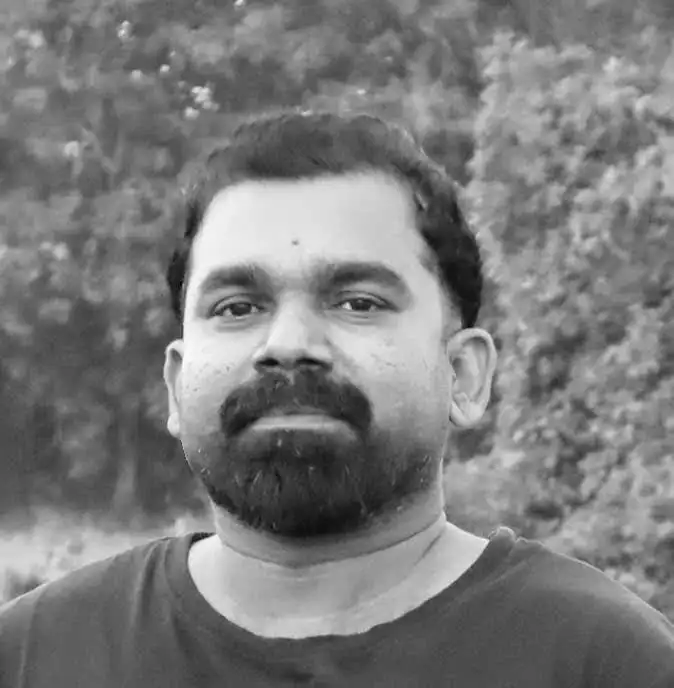
Jigesh Kumar (b. 1986, Payyanur, Kerala) is a sculptor whose practice explores time, memory, and material processes. He completed his BFA in Sculpture from the College of Fine Arts, Thiruvananthapuram (2007) and MFA from the University of Hyderabad (2011). Working with organic materials such as earth, wood, and found objects, his works reflect on the traces of time and its effects on form. He has exhibited widely and participated in residencies in India and abroad.
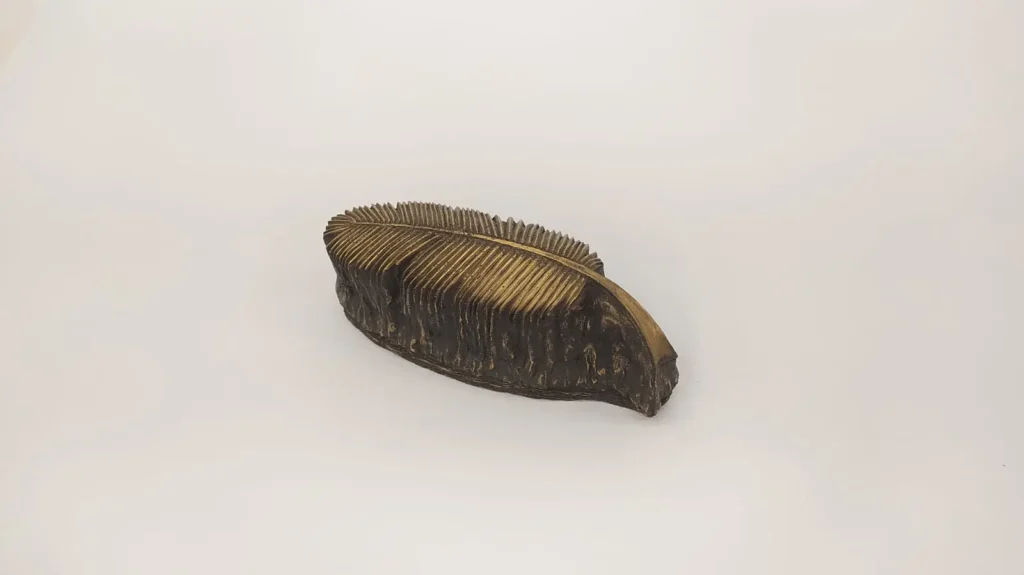
Dated after August 15, 2018 (Karkidakam 30, 1193 M. E), Bronze, 26x12x11 cm, 2023
This sculpture is a physical form of an image that stayed in my mind after the 2018 rains. I imagined a fallen coconut leaf lying somewhere in Kerala, where the heavy flow of water washed away the surrounding earth but left a residual mound of soil underneath. This bronze object captures that imagined relic, a small piece of land shaped by the forces of the flood. It exists as a witness to a specific moment in our history, turning a memory of the water into something solid. It represents the quiet, heavy presence of the ground that remains after the rains have subsided.
To Know More ↓
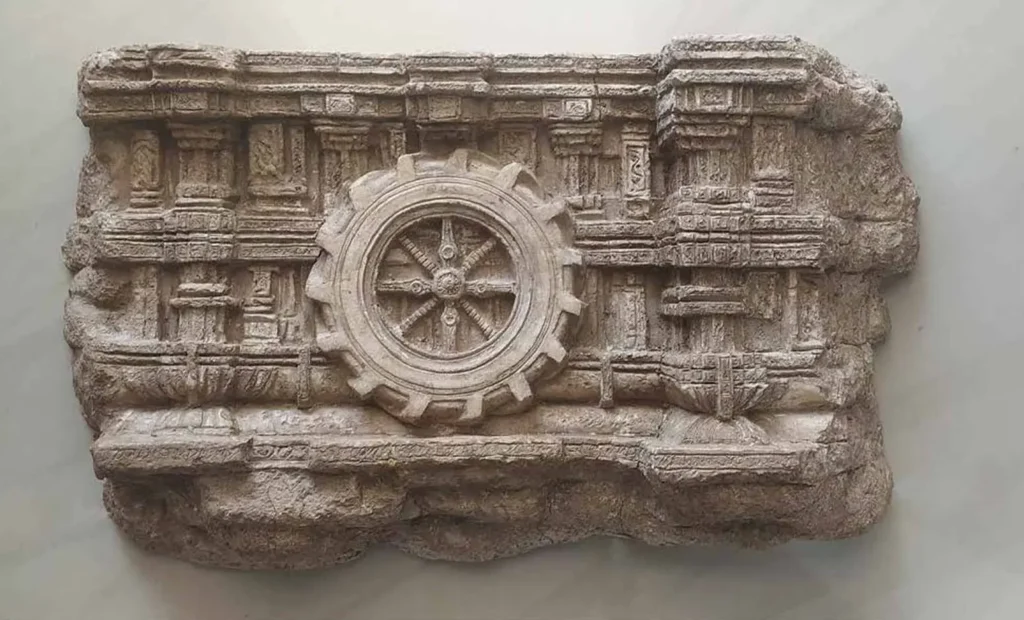
Kalachakra, Ceramic, 50x27x11 cm, 2024
The etymological root of culture lies in cultivation, a link that defines society as a product of the soil. In “Kalachakram,” the tractor wheel replaces the traditional cosmic wheel, framing agrarian labor as the true engine of human history. By embedding industrial machinery within an ancient architectural relief, the work suggests that our tools are the foundational “spokes” of civilization. This ceramic translation serves as a monument to the mechanical evolution that con
To Know More ↓
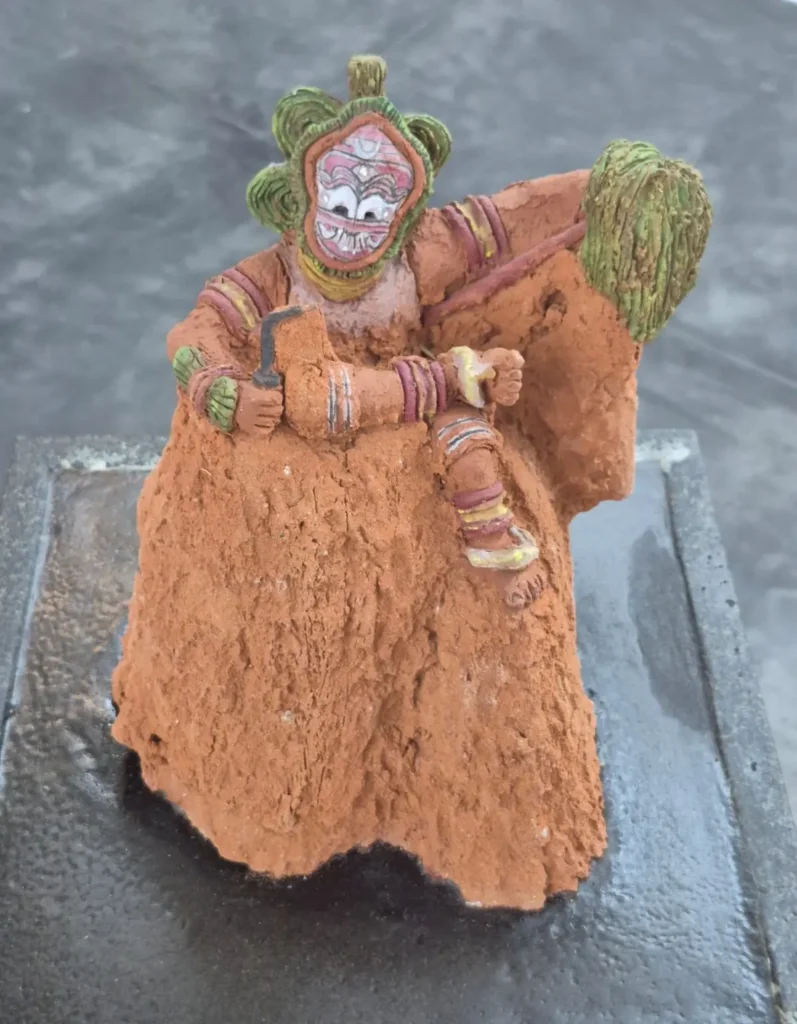
Pottan (Stupid or Wise): Sitting on the Land and Placed on the Pedestal
39x39x34 cm, Terracotta and Fiberglass, 2023
This work invokes the Pottan Theyyam as the land’s “first rebel,” bringing his historic interrogation of hierarchy into the immediate present. By sitting the figure upon an organic mound, his radical philosophy remains rooted in the soil from which it emerged. Placing this “earth-bound” deity on a formal pedestal elevates a subaltern debate, demanding we confront ancient questions within modern spaces. His posture is a seat of active defiance—a philosopher ready to engage in a contemporary argument against any systemic exclusion. In this translation of myth, the “stupid” one remains the wisest witness to our shared humanity and collective memory.To Know More ↓